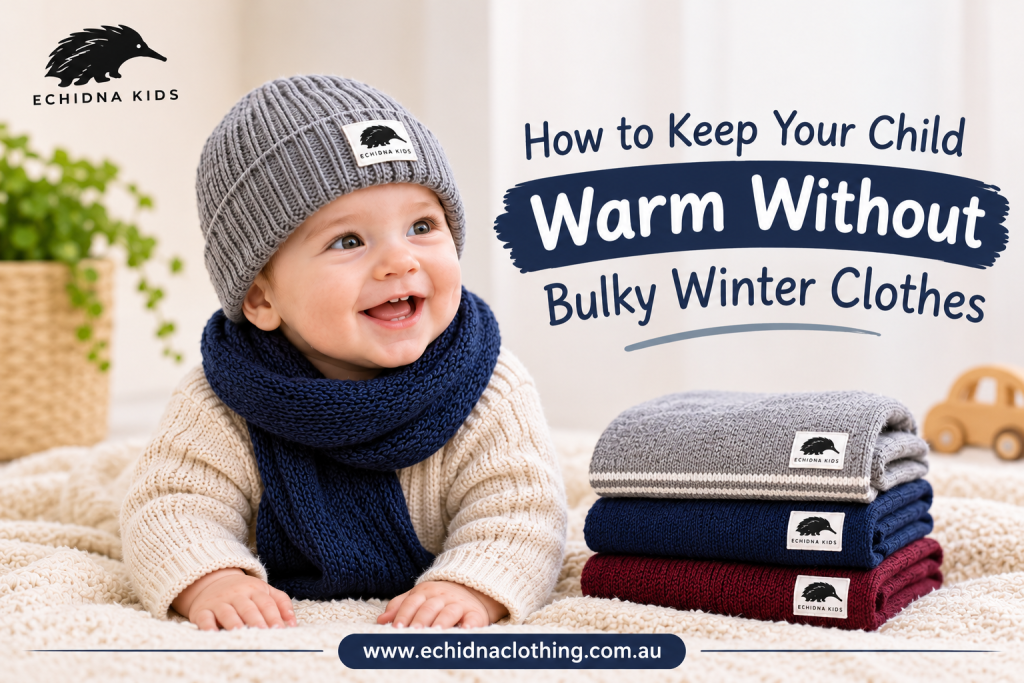
When winter arrives, getting children dressed can become a daily struggle. You want them to stay warm during school runs, outdoor play and family outings, but too many thick layers can make them sweaty, uncomfortable and reluctant to move. The good news is that keeping children cosy doesn’t always mean dressing them in heavy clothing. With smart layering, a comfortable winter scarf and a suitable blanket for supervised rest, you can help your child stay warm without weighing them down.
Why Can Heavy Winter Clothing Make Children Uncomfortable?
Thick jackets and multiple bulky layers might seem like the easiest way to protect children from the cold. However, they can create a few everyday problems.
Children naturally run, jump and play. Heavy clothing can restrict their movement and make simple activities feel difficult. They may also start sweating during active play. If damp clothing stays against their skin, they can feel chilly once they stop moving.
Common signs that your child may be wearing too many layers include:
- Sweating around the neck or back.
- Complaining that clothing feels tight or uncomfortable.
- Removing jackets, scarves or jumpers while playing.
- Finding it difficult to move their arms freely.
- Feeling hot indoors after coming in from the cold.
Instead of adding another thick layer, think about how each item contributes to warmth and comfort.
How Can You Keep Your Child Warm With Lightweight Layers?
Layering is one of the simplest ways to dress children for changing winter temperatures. Rather than relying on one heavy coat, choose a few comfortable layers that work together.
A practical combination could include:
- Base layer: A soft, comfortable top that sits close to the body.
- Middle layer: A jumper or cardigan that provides extra insulation.
- Outer layer: A suitable jacket that helps protect against wind and light rain.
- Accessories: A scarf, hat and gloves when the weather calls for them.
The advantage of layering is flexibility. If your child gets warm while playing, you can remove a layer. If the temperature drops later, simply add it again.
A useful general guide for older babies and young children is to dress them in about one more layer than an adult would wear in the same conditions. However, always consider the weather, activity level and your child’s comfort.
Can a Winter Scarf Keep Your Child Warm Without Adding Bulk?
Yes. A well-fitting winter scarf can provide useful warmth around the neck without requiring another thick jumper or jacket.
The neck area is often exposed when children wear open jackets or move around outdoors. A scarf can help cover this area and make a lightweight outfit feel more comfortable on chilly mornings.
When choosing a scarf, consider these points:
- Soft material: Choose a fabric that feels comfortable against your child’s skin.
- Suitable size: A scarf should not be excessively long or bulky.
- Easy fastening: A simple design can make dressing easier.
- Comfortable fit: It should sit comfortably without feeling tight.
- Weather suitability: Choose a suitable level of warmth for the conditions.
For younger children, supervise scarf use and make sure loose ends cannot catch on playground equipment. Never allow a scarf to become a choking or strangulation hazard. Remove it when it isn’t needed.
Parents looking at scarves in Australia may notice different materials, sizes and designs. Merino wool is one option worth considering because it is naturally soft and helps regulate temperature. Echidna Kids’ scarf range includes Australian Merino wool designs, including a scarf with a slit that allows one end to pass through the other. This can make it easier for children to put on and adjust.
Why Is Merino Wool Worth Considering for Winter Comfort?
Not all winter fabrics feel the same. Some thick materials can feel heavy, while others may irritate children who are sensitive to scratchy textures.
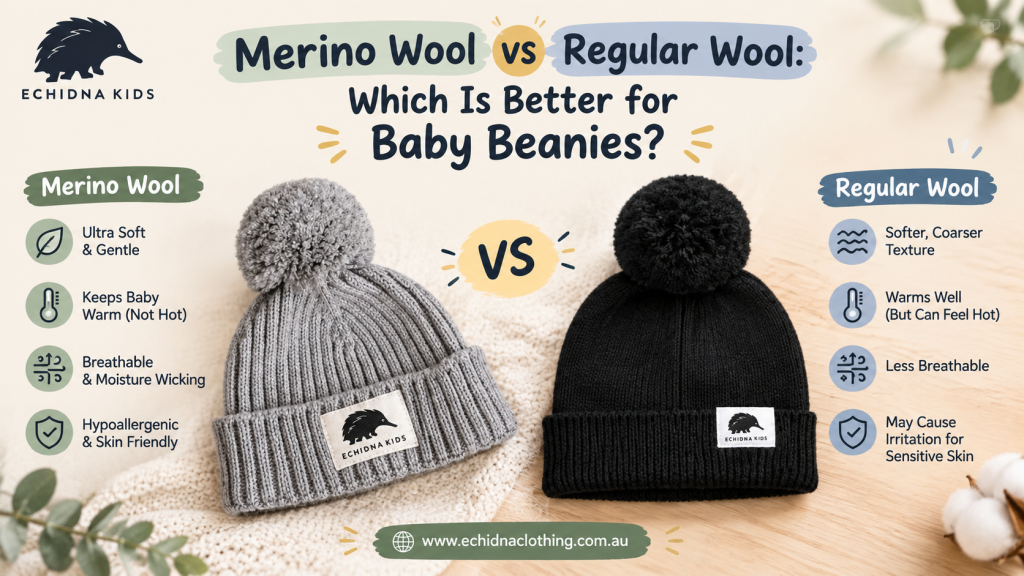
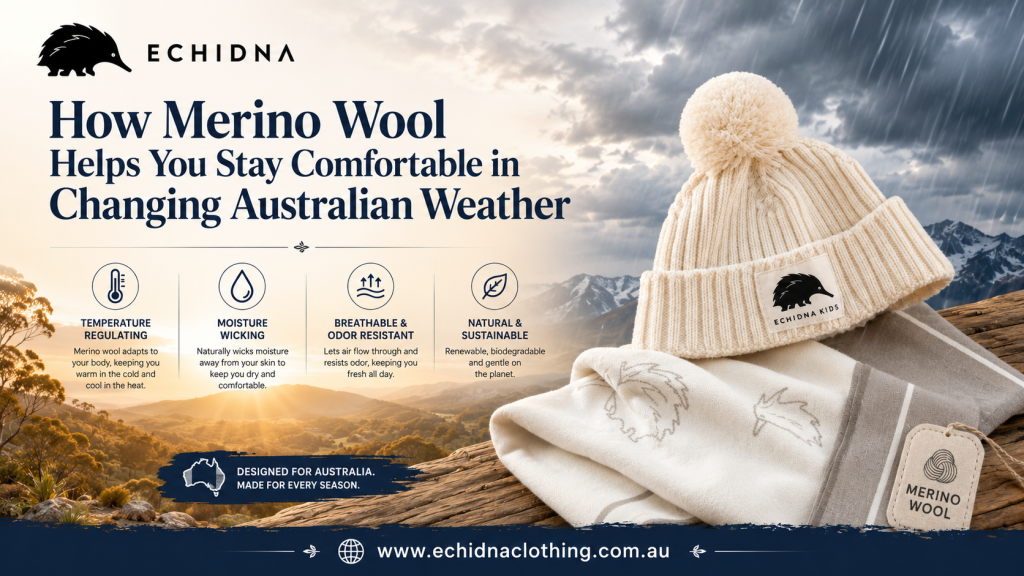
Merino wool is valued for its fine fibres and natural temperature-regulating properties. It can help provide warmth in cooler conditions while remaining comfortable to wear. Its breathable nature also makes it a useful material to consider when choosing winter accessories.
When comparing winter clothing, look beyond thickness. Ask yourself:
- Does the material feel comfortable against the skin?
- Is the garment easy for your child to move in?
- Can it be worn with other lightweight layers?
- Is it suitable for the weather and activity?
A lighter, comfortable accessory can sometimes be more practical than another bulky clothing layer.
How Can a Wool Blanket Keep Children Cosy at Home?
Children don’t need to wear heavy clothing every time they feel cold. When they’re reading, relaxing on the sofa or sitting with family, a suitable blanket can provide an extra layer of comfort.
A wool blanket in Australia can be a practical option for families looking for natural warmth during cooler months. Australian Merino wool blankets are particularly worth exploring if you prefer fine wool fibres and a soft feel.
A blanket can be useful for:
- Keeping your child comfortable while reading or watching a film.
- Adding warmth during supervised quiet time.
- Providing an extra layer over the legs while sitting together.
- Keeping in the car for supervised use when appropriate.
- Making a nursery or family space feel cosy.
When choosing a blanket, consider its size, weight, texture and care instructions. A blanket that is easy to handle and comfortable against the skin is more likely to become part of your family’s everyday routine.
If you’re comparing a wool blanket in Australia, check the fibre content and product details rather than judging warmth by appearance alone. Echidna Kids offers Australian Merino wool blanket designs in different patterns and colours.
Important baby safety note: A loose blanket must never be placed in an infant’s sleep space. For babies, follow current safe-sleep guidance and use appropriate sleep clothing or a correctly fitted wearable blanket instead. Keep the cot free from loose bedding, pillows and other soft items.
How Can You Tell If Your Child Is Too Hot or Too Cold?
Parents sometimes add extra clothing because their child’s hands or feet feel cold. However, these areas don’t always give an accurate picture of their overall temperature.
For babies and young children, check the chest, back or tummy instead. If these areas feel comfortably warm, your child may already have enough layers. If the skin feels hot or sweaty, remove a layer.
Watch for these signs:
Your child may be too warm if:
- Their back or chest feels hot.
- They’re sweating.
- Their cheeks look unusually flushed.
- They seem uncomfortable in their clothing.
Your child may need another layer if:
- Their body feels cool.
- They’re shivering.
- They’re uncomfortable in the cold.
- Their clothing is damp or they’ve been exposed to cold wind.
Adjust clothing as the weather changes. Also remove outdoor hats and extra layers when you move into a warm indoor space. Babies should not wear hats while sleeping indoors.
What Should You Pack for a Cold Morning Outing?
Winter mornings can be unpredictable. It may feel cold when you leave home but become warmer by lunchtime. Packing a few useful items can save you from carrying unnecessary clothing.
Before heading out, consider taking:
- A comfortable jumper or cardigan.
- A suitable jacket for the weather.
- A lightweight winter scarf for older children.
- A hat and gloves when needed.
- An extra layer in case the temperature drops.
- A blanket for supervised use during family outings.
For car journeys, avoid placing a baby or child in a car seat while wearing a thick, bulky coat underneath the harness. Bulky clothing can prevent the harness from fitting securely. Use thin layers and place a blanket over the safely fastened harness if extra warmth is needed.
Frequently Asked Questions
1. How do I keep my baby warm without using heavy clothes?
Dress your baby in comfortable, lightweight layers that suit the room or outdoor temperature. Check their chest or back to see whether they’re comfortably warm. Remove outdoor hats and extra layers when indoors. For sleep, follow safe-sleep guidance and keep loose blankets out of the cot.
2. Is a baby beanie necessary during winter?
A baby beanie can help protect a baby’s head outdoors in cold weather. Choose a comfortable size and a soft material that doesn’t feel tight. However, remove the beanie when your baby comes indoors and always take it off before sleep to help prevent overheating.
3. Are wool blankets suitable for babies?
A wool blanket may be useful for supervised warmth when a baby is awake and being held or closely watched. However, loose blankets should not be used in an infant’s sleep space. Always follow current safe-sleep recommendations and choose suitable sleep clothing for bedtime.
4. What should I look for when choosing a baby blanket?
Consider the material, softness, size, weight and care instructions. A blanket should suit the intended use and feel comfortable against the baby’s skin. If you’re choosing one as a gift, check the product details and remember that loose blankets aren’t safe for an infant’s cot.
5. What makes a good newborn baby gift from Echidna Kids?
A useful newborn gift is one that combines thoughtful design with everyday practicality. Echidna Kids offers Australian Merino wool blankets and other woollen accessories. A blanket can make a lovely gift for supervised use, while parents should always follow safe-sleep guidance when preparing their baby’s sleeping space.
Conclusion
Keeping children warm doesn’t have to mean dressing them in layers of heavy clothing. The key is choosing comfortable fabrics, using lightweight layers and adjusting outfits as the temperature changes. A suitable winter scarf can help cover exposed areas outdoors, while a wool blanket can provide comfort during supervised family time at home.
When choosing winter essentials, focus on softness, fit, practicality and the needs of your child. Australian Merino wool scarves and blankets are options worth considering for families who value natural fibres. With its range of Merino wool accessories and blankets, Echidna Clothing offers parents practical pieces to explore when preparing for the colder months. Above all, remember that comfort and safety matter just as much as warmth.