There’s something almost funny about getting a beanie wrong. It’s a hat. A small, stretchy, pull-over-your-head hat. And yet, if you’ve ever bought one that scratched your forehead raw by lunchtime, or watched a toddler fling it off for the fifth time in a morning, you already know picking the right beanie actually takes a bit of thought. Whether you are looking at beanies for women or beanies for men, you need to balance style with genuine warmth during those unpredictable Australian winters.
So let’s talk about what actually goes wrong, and how to fix it before you spend money on something that collects dust in a drawer.
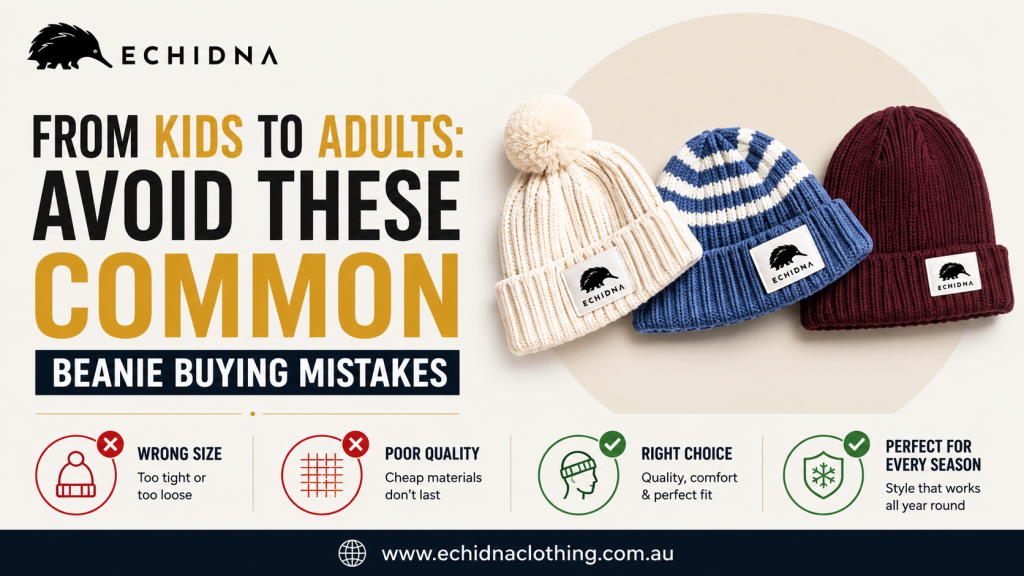
Mistake 1: Letting the Price Tag Do the Thinking
It’s tempting, especially when you’re buying for kids who’ll grow out of it in six months anyway. Grab the cheapest option, job done.
The problem? Budget synthetic beanies tend to trap heat in a stuffy, uncomfortable way, not the cosy kind. They don’t breathe, they can make your head sweat on a brisk walk, and the fabric often pills or stretches out after a handful of washes.
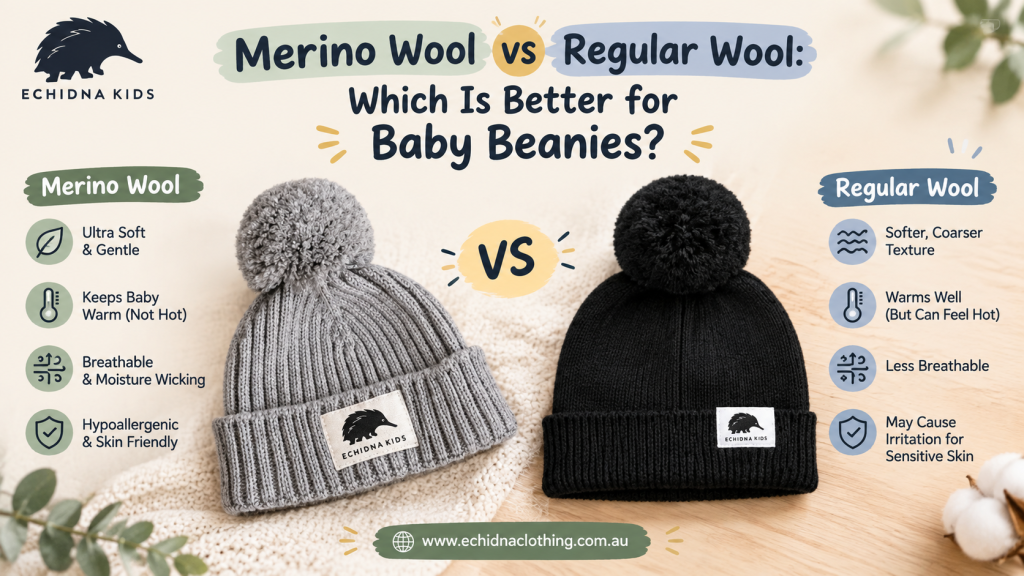
Wool is a different story entirely. A good wool can actually make baby beanie wear softer against sensitive skin, naturally breathe as body temperature shifts, and hold its shape wash after wash. Yes, it costs a little more upfront. But it’s the kind of thing that gets worn every single day rather than abandoned after one school run.
Think of it less like buying a winter accessory and more like buying decent footwear. You notice the difference immediately when you go cheap, and you regret it pretty fast.
Mistake 2: Skipping the Size Check Completely
Most people skip straight to colour. Don’t do this.
A beanie that sits too tight leaves a red pressure line across your forehead and becomes deeply annoying by mid-morning. One that’s too loose slides down constantly, covering eyes and needing to be pushed back up every ten minutes.
For adults, this is inconvenient. For a toddler beanie, it’s practically a disaster. Toddlers are already busy climbing, running, refusing to sit still and a poorly fitting hat will be off their head and on the ground before you’ve even made it to the park gate.
Before buying, actually look at the sizing guide. Check head circumference measurements if they’re listed. Look for whether the knit has good stretch-and-return, meaning it stretches to fit but springs back to hold its shape. That elasticity is what keeps a beanie in place during real movement.
Mistake 3: Assuming Australian Winter Means One Thing
Here’s something that catches people off guard: Australia doesn’t really do a uniform winter. Melbourne in July is a completely different situation from Brisbane in July. Even within the same city, the gap between a sunny afternoon and a cold morning can be significant.
This is why a lot of shoppers looking for womens beanies Australia or mens beanies Australia specifically end up frustrated with beanies designed for, say, European ski conditions. Those things are simply too heavy. You walk outside in them and you’re cold. You step into a café or start moving and you’re sweating. Neither is comfortable.
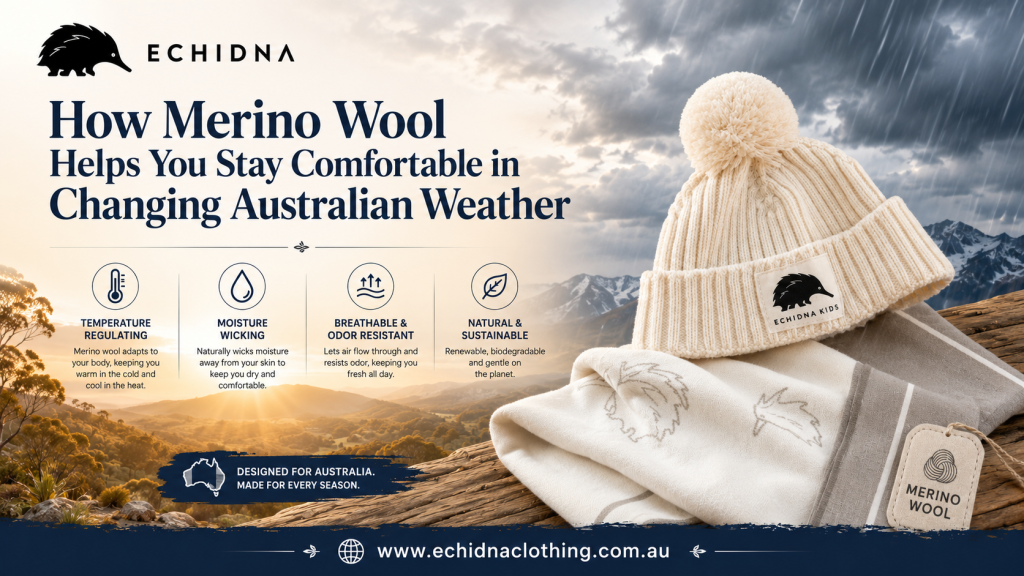
What actually works for most of the country is a mid-weight, breathable natural fibre. Something that insulates without turning into a heat trap. A quality merino or wool-blend beanie can flex across a wider temperature range than most synthetics, which is why they tend to be the practical choice for everyday Australian wear rather than just the premium one.
Mistake 4: Buying Fashion and Forgetting Function
Nobody’s saying a beanie can’t look good. That’s not the point at all.
The issue is when appearance is the only consideration. A beanie that looks great in a flat-lay photo but stretches out immediately, loses its shape, or feels scratchy after half an hour of wear is not actually a good beanie, it’s just good packaging.
There are plenty of beanies for women that genuinely do both. Neat, flattering designs in quality wool that hold their shape and look just as good at the end of winter as they did on day one. The key is checking what the beanie is actually made of, not just what it looks like.
A useful mental test: if someone showed you this exact beanie without the brand tag and the pretty product photography, would you still want it? If the fabric, the fit, and the warmth still make sense, yes. If you’re mainly buying the aesthetic, it may look a bit harder.
Mistake 5: Treating Kids’ Beanies as Miniature Adult Ones
A smaller size is not the same as a different design.
Kids beanies and especially childrens beanies for the school-age crowd have some real differences from adult versions that are worth understanding. Children’s skin is more sensitive, so fabrics that feel fine on an adult can still cause irritation or itching on a five-year-old. Kids’ beanies also need to survive a lot more: school bags, playground tumbles, lost-and-found boxes, and daily washing.
Good children’s beanies are designed with softer inner fibres, reinforced knit construction for durability, and sizing that accounts for the fact that kids’ heads grow. Some designs also have slightly more stretch to accommodate a range of sizes useful when you’re buying ahead of a growth spurt.
If you’re buying for a toddler specifically, the stakes are even higher. A beanie they refuse to wear is useless no matter how cute it looked in the photo. Comfort is genuinely everything at that age.
Mistake 6: Forgetting About Breathability Entirely
Warmth gets all the attention. Breathability barely gets a mention, and that’s a problem.
Here’s the thing: you don’t stay at the same temperature all day. You might start a morning walk feeling cold, then warm up quickly once you’re moving. If your beanie can’t release any of that heat, you end up with a sweaty, uncomfortable head that actually feels worse than just being slightly chilly.
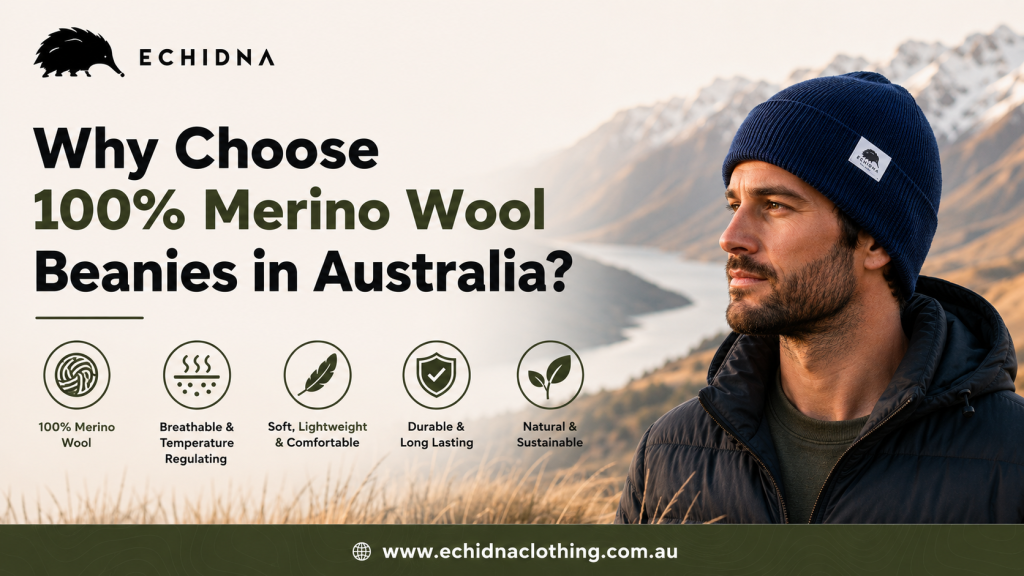
Breathability matters for mens wool beanies just as much as it does for kids’ ones. Natural wool fibres work with your body temperature rather than against it; they insulate when it’s cold and release moisture when you heat up. Synthetics, in most cases, don’t do this as well. They either trap heat or fail to insulate properly depending on the conditions.
This is why breathability isn’t a bonus feature; it’s one of the main reasons quality wool beanies are worth buying in the first place.
Mistake 7: Expecting One Beanie to Do Everything
It’s a reasonable assumption. It’s also why people end up uncomfortable in situations where their beanie was never really designed to perform.
A lightweight everyday beanie is ideal for commuting, school runs, and casual outings. It’s not ideal for a windy coastal hike. A thick, heavily insulated beanie is great for serious cold-weather activities, but wearing it in a shopping centre is going to feel suffocating pretty quickly.
For adults who spend time outdoors in varied conditions, it’s worth thinking about whether one beanie genuinely covers everything or whether two different weights makes more practical sense. For kids, a reliable everyday option that handles the school-to-park-to-back-home routine is usually the priority.
Understanding how the beanie will actually be used most of the time shapes the decision far more usefully than just comparing knit patterns or colours.
Conclusion
Beanies are easy to buy badly. A bit of attention to fabric, fit, and function and understanding that kids’ needs are genuinely different from adults’ goes a long way toward getting it right.
Whether you’re after practical mens beanies Australia winters actually call for, softer childrens beanies that survive a school term, or something that works for a toddler who won’t keep anything on their head for more than thirty seconds, the same principle applies: prioritise comfort and quality over a bargain or a pretty look, and you’ll end up with something that actually gets worn.
There’s something almost funny about getting a beanie wrong. It’s a hat. A small, stretchy, pull-over-your-head hat. And yet, if you’ve ever bought one that scratched your forehead raw by lunchtime, or watched a toddler fling it off for the fifth time in a morning, you already know picking the right beanie actually takes a bit of thought. Especially if you’re looking at beanies for women that need to balance style with genuine warmth during those unpredictable Australian winters.
So let’s talk about what actually goes wrong, and how to fix it before you spend money on something that collects dust in a drawer.