Choosing a baby hat can feel surprisingly complicated. You want something warm enough for chilly mornings, soft against delicate skin, and comfortable enough that your little one won’t immediately try to pull it off. Then comes the bigger question Is merino wool really better than regular wool for babies?
The short answer is that merino wool can offer some important advantages, especially when softness, temperature regulation, and everyday comfort matter. However, not every wool product is the same. Fibre thickness, construction, fit, and care all affect how comfortable a beanie feels.
So, before choosing beanies for newborns, let’s look at what actually separates merino wool from regular wool.
Why Can Regular Wool Feel Itchy on a Baby’s Skin?
If you’ve ever worn a scratchy wool jumper, you’ll understand the problem immediately.
Regular wool can contain relatively coarse fibres. When those fibres bend or press against the skin, they may create a prickly sensation. Adults can simply remove an itchy jumper. Babies can’t explain what’s bothering them.
That’s why softness becomes more important when choosing clothing for young children.
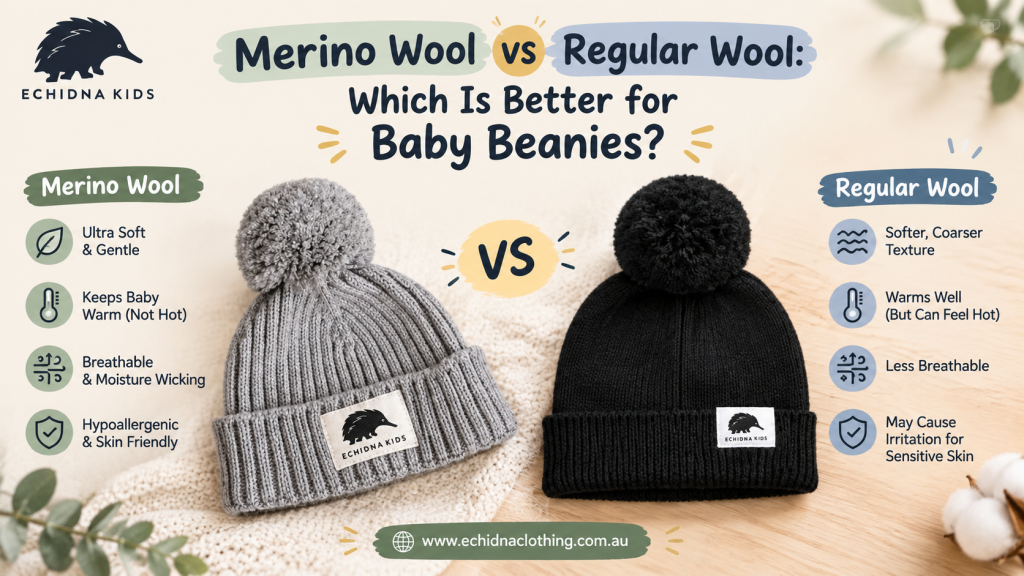
Merino wool comes from Merino sheep and is known for its finer fibres. Finer fibres tend to feel smoother against the skin because they bend more easily instead of creating the coarse, scratchy feeling associated with some traditional wool garments.
That doesn’t mean every merino product will feel identical. The quality of the fibre and how the fabric is knitted still matter.
For babies with sensitive skin, it’s sensible to check the product’s fibre composition and feel the material before making it part of their everyday wardrobe.
What Makes Merino Wool Different From Regular Wool?
The biggest difference isn’t simply the word “merino.” It comes down to the structure and fineness of the wool fibre.
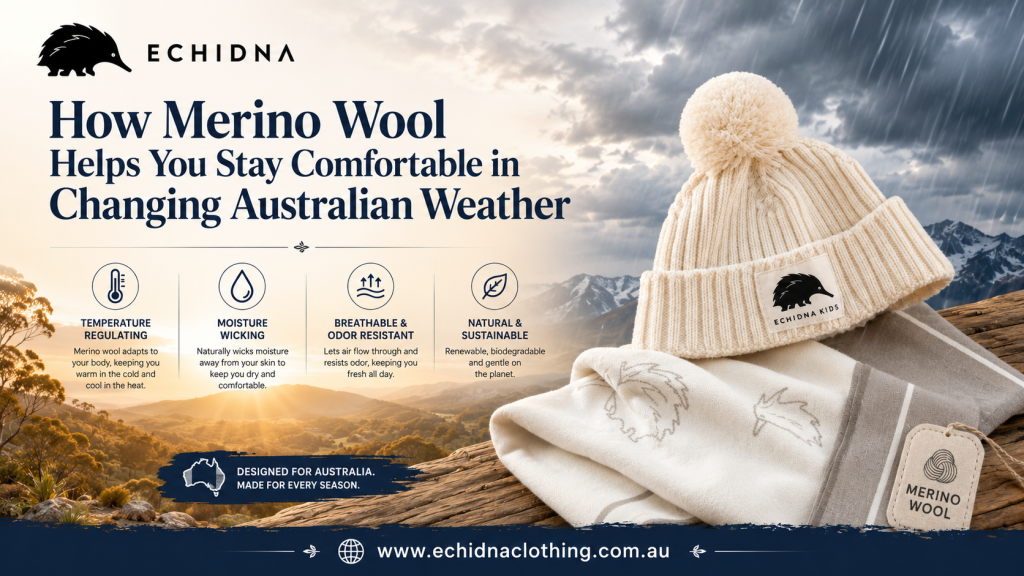
Merino wool is valued for its fine fibres and natural ability to help manage warmth and moisture. Echidna states that its garments use carefully selected merino wool based on factors including micron count, fibre consistency, and staple strength.
This gives merino several practical benefits:
- Fine fibres: They can feel softer against delicate skin.
- Temperature regulation: Wool naturally helps insulate while allowing excess heat and moisture to move away.
- Breathability: Merino can be more comfortable when temperatures change.
- Natural warmth: It provides insulation without requiring an extremely thick fabric.
- Durability: Good-quality wool can handle regular use when cared for correctly.
Think of merino as a natural thermostat rather than simply a thick winter fabric. It isn’t just about trapping as much heat as possible. It’s about helping your child stay comfortable as conditions change.
Is Merino Wool a Good Choice for Beanies for Newborns?
Newborns have different needs from older children. They can’t tell you when they’re uncomfortable and their temperature regulation is still developing.
That makes the design of a newborn baby hat particularly important.
A good beanie should provide warmth without being excessively heavy or restrictive. It should fit comfortably around the head and ears without becoming tight.
Merino can be useful here because warmth doesn’t always have to come from bulk. Echidna’s baby beanie range includes 100% Australian Merino wool options designed for babies and young children. Merino Wool Baby Hat, for example, uses a folded hem and comes in a 0–2-year size.
Still, parents shouldn’t assume that wool automatically means “safe for every situation.” Always check the fit and your baby’s comfort. If the child becomes sweaty, flushed, unusually warm, or irritated, remove the beanie and reassess the layers.
Does a Toddler Need a Different Type of Beanie?
Yes, the needs can change as children grow.
A toddler is more active than a newborn. They’re running, climbing, sitting in the pram, going in and out of buildings, and constantly moving between different temperatures.
A toddler hat therefore needs to balance warmth with freedom of movement.
Fit matters too. A beanie that’s too loose may slip over the eyes. One that’s too tight can become uncomfortable and leave marks around the head.
Echidna’s Merino Wool Toddler Beanie options include pom-pom styles made from 100% Australian Merino wool. The range is designed for young children while offering a practical winter layer.
For active toddlers, look for:
- A comfortable, secure fit
- Enough coverage around the ears
- Soft fibres
- Breathable construction
- Easy-care instructions
- A design that stays in place during movement
The fanciest kids hats aren’t necessarily the best ones. Comfort usually wins the battle.
Can Merino Wool Help Prevent Overheating?
This is one of the most common concerns parents have.
When buying winter clothing, it’s easy to think, “The thicker it is, the warmer it will be.” That’s not always true.
Merino wool naturally insulates while allowing moisture vapour to move through the fabric. This can make it useful when temperatures fluctuate throughout the day.
Echidna describes its merino wool as a natural insulator that helps maintain a comfortable temperature.
However, a beanie is only one part of the clothing system. If a baby is already wearing several warm layers, adding a thick hat may be unnecessary.
A useful rule is simple check the baby, not just the weather forecast.
Feel the back of the baby’s neck or upper back. If they’re hot or sweaty, they may need fewer layers.
Is Merino Wool Better Than Regular Wool for Everyday Use?
For many families, merino can be the more comfortable option. But “better” depends on what you’re comparing.
Regular wool can still be warm, durable, and perfectly suitable for some clothing. The issue is that coarser wool may feel less comfortable against sensitive skin.
Merino’s finer fibres give it an advantage when the fabric sits directly against the skin, particularly in something like a beanie kids wear for several hours.
If softness is your priority, merino is worth considering.
If you’re mainly looking for a thick outer winter layer, other wool types may also work well.
The key isn’t choosing the most expensive fibre. It’s choosing the right material for the child’s age, activity level, skin sensitivity, climate, and intended use.
How Should You Care for a Merino Baby Beanie?
One reason parents hesitate to buy wool is the thought of complicated washing.
Fortunately, caring for merino doesn’t have to become a household chore.
Echidna recommends following the care label carefully and using gentle wool detergents. Its care guidance also recommends avoiding fabric softeners, harsh washing, wringing, and excessive heat.
For a merino beanie:
- Check the care instructions before washing.
- Use cold or lukewarm water when appropriate.
- Choose a gentle wool detergent.
- Avoid fabric softener.
- Don’t wring or twist the fabric.
- Reshape the beanie while damp.
- Avoid high heat and tumble drying unless the care label specifically allows it.
Small habits like these can make a big difference to the life of a wool garment.
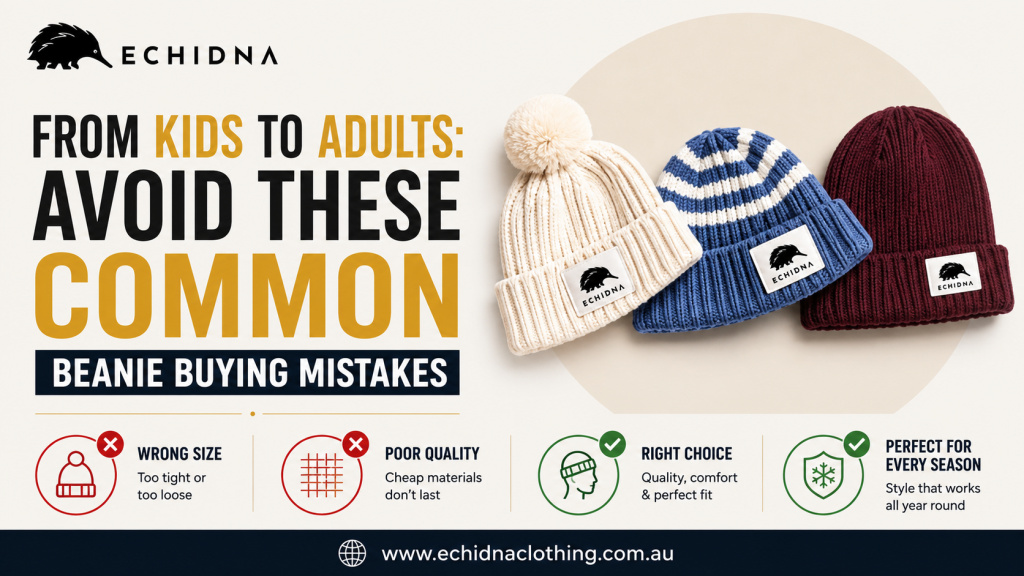
What Should Parents Look for When Buying a Baby Beanie?
Before choosing a beanie, don’t focus only on colour or appearance.
Ask yourself:
- Is the material soft enough for my child’s skin?
- Is the size appropriate for their age?
- Does it cover the ears comfortably?
- Could it become too warm when worn with other layers?
- Is the fabric breathable?
- Can I care for it easily?
- Will my child actually tolerate wearing it?
These questions are more useful than simply asking which beanie looks the cutest.
A beautiful hat that your child refuses to wear isn’t much help on a cold morning.
What About a Merino Baby Blanket as a Newborn Gift?
A baby beanie isn’t the only useful wool item for a newborn.
A merino baby blanket can also be a practical newborn gift because it can be useful at home, during outings, or as an extra layer when appropriate.
Echidna offers merino wool blankets alongside its children’s beanies and other wool products. Its approach focuses on natural materials, traceability, sustainable farming practices, and locally produced garments.
For newborn baby gifts, practical items often become favourites because parents can use them repeatedly rather than putting them away after the first few months.
The best gift isn’t necessarily the most elaborate one. Sometimes it’s simply something soft, useful, and easy to reach for every day.
So, Which Is Better: Merino Wool or Regular Wool?
For baby and toddler beanies, merino wool has several clear advantages. Its fine fibres can feel softer against delicate skin, while its natural insulating and moisture-managing properties can make it comfortable across changing temperatures.
Regular wool isn’t automatically a poor choice. Quality and fibre fineness matter more than the label alone.
If you’re choosing a baby hat, focus on softness, fit, breathability, warmth, and proper care. For toddlers, add durability and a secure fit to that checklist.
Ultimately, the best beanie is the one that keeps your child comfortable without making dressing another daily battle.
For parents exploring natural wool clothing and practical newborn essentials, Echidna offers a range of merino wool beanies, blankets, and children’s garments designed with comfort and everyday use in mind.
FAQs
1. Is merino wool safe for babies?
Merino wool can be suitable for babies because its fine fibres are generally softer than many coarser wool fibres. However, every baby is different. Check the fabric, fit, and your baby’s skin for signs of irritation.
2. Are merino beanies good for newborns?
A properly fitted merino beanie can be a useful cold-weather layer for a newborn. Choose the correct size and avoid overheating by considering the baby’s other clothing layers.
3. What is better for a baby hat: merino wool or cotton?
It depends on the weather and purpose. Merino is naturally insulating and can help manage moisture, while cotton is lightweight and breathable. For cooler conditions, merino may offer more useful insulation.
4. Is a merino baby blanket a good newborn baby gift?
Yes. A merino baby blanket can be a practical and thoughtful newborn gift because it can be used regularly. Look for a suitable size, soft construction, and clear care instructions.
5. How do I wash a merino wool baby beanie?
Always follow the product’s care label first. In general, use a gentle wool detergent, avoid fabric softeners and harsh heat, and don’t wring the fabric. Echidna recommends careful washing and flat drying to help preserve merino wool products.